
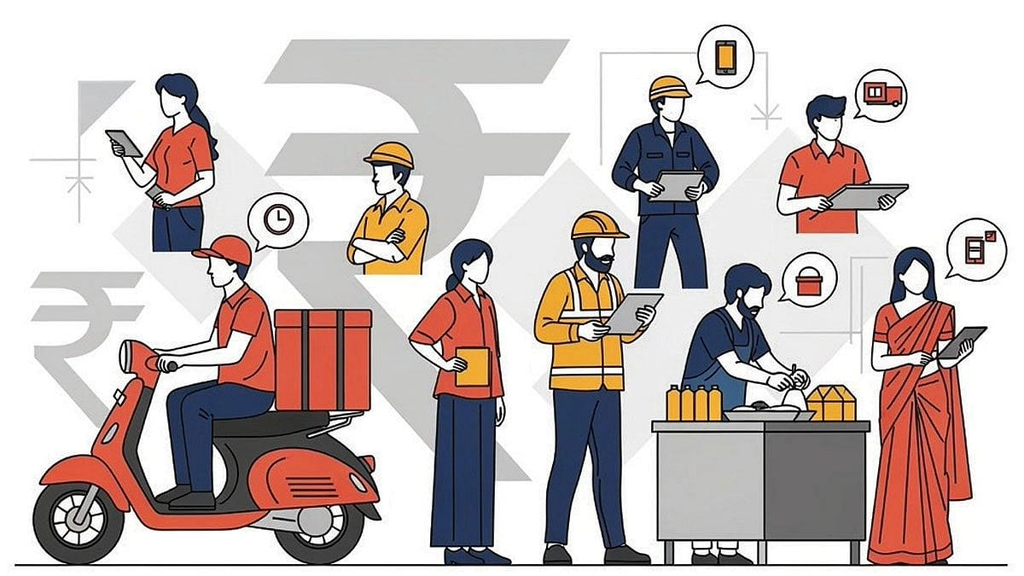
India’s Commerce Minister Piyush Goyal’s recent pitch to Dutch investors about Indians’ willingness to work hard, even beyond the conventional working hours, has not gone down well with many. The remarks sparked a debate about whether long hours and difficult working conditions should be celebrated as a national strength and pitched to the developed world!
However, there may be another way to interpret the minister’s pitch. It could be seen as an earnest, perhaps even urgent, appeal to the developed world to hire Indian talent, at a time when geopolitics and AI are prompting companies to cut down their workforce in a bid to become leaner and more efficient. What is being criticised as poor working conditions may also reflect the economic pressures facing Indian workers.
As the most populous nation in the world, India’s biggest export to the world is its people. The country earns record remittances in recent years, contributed not just by techies and doctors but also by thousands of blue-collar workers, nurses, chefs and construction workers. The working-class population in India is acutely aware of the struggles involved in finding modest employment and retaining it. For the world’s fifth-largest economy, India’s per capita income remains low at around $2800.
The minister’s comments need to be viewed in the context of several global and domestic trends:
- Impact of geopolitics and AI on white-collar jobs
The deteriorating global economic situation and the ensuing geopolitical tensions are prompting many countries to roll out anti-immigration policies that restrict foreign nationals from taking up jobs or make it harder for companies to outsource work. For instance, the US has introduced sweeping entry suspensions and restrictions for foreign nationals, alongside higher H-1B visa fees and tighter screening rules. Similarly, countries such as Japan, Australia, Canada and the UK have tightened their immigration policies. This anti-immigration stance, as part of a gradual de-globalisation, is not positive for India as a country supplying talent and manpower to the world.
Besides, the rapid spread of AI is prompting companies to reassess their workforce requirements, even as they restructure their business and invest in new technologies. This raises questions about the future of some white-collar jobs, including roles in IT and management. Microsoft’s recent voluntary exit offer is one example of this broader workforce restructuring. Around 60,000 employees across participating teams in the US, Canada, India and the UK are eligible to leave the company with financial support. The company employs around 23,000 people in India, although the company has not disclosed how many of them are eligible for the offer.
Earlier in June this year, India’s Chief Economic Advisor, V. Anantha Nageswaran, hinted at the imminent end of the era that favoured software jobs and MBA degrees. He recommended that the country place greater value on trade skills such as welding, plumbing, electrical work and carpentry.
Could these skills become India’s next big employment export as the traditional promise of software jobs comes under pressure?
Subscribe to read further!