
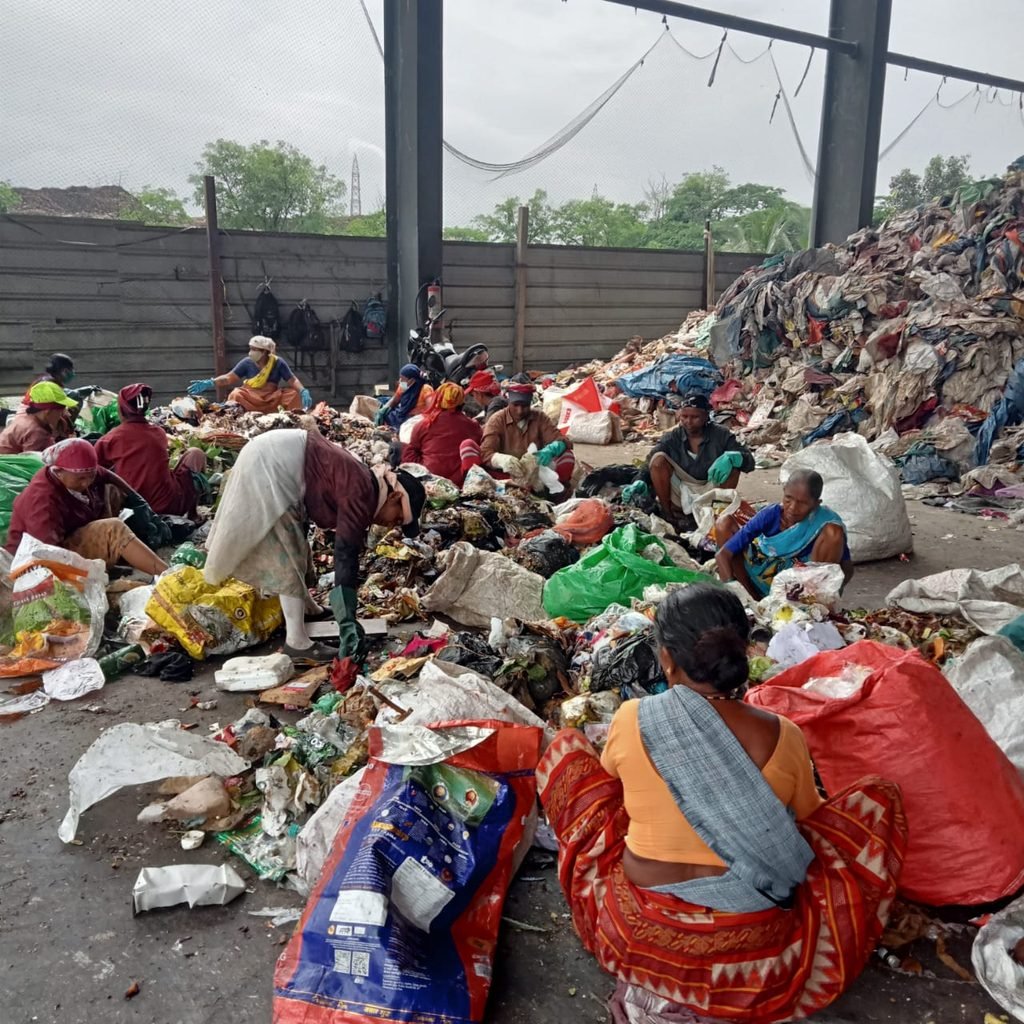
Have you noticed the change in the size and contents of your garbage bag over the years? (Actually there should be two garbage bags – one for dry waste and another for wet waste). Chances are that with an increase in your prosperity (and consumption), your humble garbage bag has been telling a different story. Food waste is increasingly sharing space with quick-commerce packaging, food-delivery containers, soiled diapers & sanitary products, plastic sachets, worn-out clothes & shoes and discarded electronic devices.
The garbage emerging from India’s cities is essentially a reflection of its prospering and urbanising consumer economy. The waste is more packaged, more synthetic, more disposable and, in many cases, more difficult to recycle. The cost of this prosperity is increasingly being pushed onto municipal infrastructure, waste workers and the environment.
“In terms of waste, India has traditionally been very different from European and American markets”, says Kiran Dighavkar, deputy municipal commissioner (Solid Waste Management) at Brihanmumbai Municipal Corporation (BMC). Dighavkar has the unenviable task of overseeing solid waste management in Mumbai, the maximum city that generates around 8,000 tonnes of waste every day. “We have had a higher proportion of organic wet waste up to around 80%. Now, that proportion has come down to 45%, thanks to over half of the country’s population now living in urban areas and the rural population also adapting to urban habits.”
With rampant construction and redevelopment across Mumbai, construction and demolition (C&D) debris have become another significant component of the city’s waste. This includes huge volumes of concrete, tiles and metals, much of which finds its way to landfills. The country’s richest civic body has now turned its attention to managing this waste too. This year, till mid-October, BMC collected around 2.06 lakh tonnes of such waste, around 46% higher than the previous year. However, this is less than 10% of the over 30 lakh tonnes of C&D debris that the city generates annually.
People’s cooperation remains paramount to making waste management effective. “BMC has over 28,000 sweepers who clean the city every morning” informs Dighavkar. “Yet, in just a few hours, the roads and public areas start looking dirty again.” In fact, Dighavkar points out that eliciting behavioural change from the public has been the biggest challenge of his job.
To be sure, waste segregation at source has been a challenge globally. Countries across Europe and Asia Pacific impose stringent rules and penalties for violating garbage segregation norms.
It was only in 2000 that India framed its first dedicated national regulations for municipal solid waste. However, it was the Solid Waste Management Rules 2016, formulated in the wake of the Swachh Bharat Abhiyan, that brought major reforms in this area. These rules were superseded by a new set of regulations in 2026, introducing mandatory four-stream segregation and stronger enforcement under the polluter-pays principle.
While the regulatory framework has evolved, enforcement on the ground remains far from satisfactory.
Despite mandatory segregation, the waste collected from households and institutions often ends up being mixed. Rising demand for packaged foods, quick-commerce deliveries and personal care products has led to a surge in multi-layered packaging. Such packaging combines plastic with aluminium foil or paper, making its different components difficult to separate and recycle economically.
Rising living standards and changing consumption habits have driven wider adoption of disposable diapers, sanitary pads and household cleaning products. Expired medicines and discarded electronic devices add another layer to the waste-disposal challenge. When these items are mixed with general waste instead of being separately collected and handled, they can pose serious health and environmental risks.
“We get gloves to handle the waste segregation but they don’t always fit well making it inconvenient to segregate waste while wearing them,” said Sushila Sable of the Stree Mukti Sanghatana, which organises women waste-pickers into self-help groups that partner with the BMC in sorting, composting and recycling the waste collected. Instead of receiving a fixed income directly from the civic body, the waste-pickers earn their livelihood by selling the sorted waste to local scrap dealers. The scrap value varies from category to category. For instance, high quality plastic items and cardboards are among the most valuable waste categories, fetching Rs 13-15 per kg, whereas glass and single use plastic yield the lowest rate of a couple of rupees a kilo. The waste-pickers earn an average of around Rs 500-600 a day.
A drought in her village in Aurangabad in 1972 prompted Sable and her family to migrate to Mumbai when she was a young girl. Working as a waste picker since then, Sable has witnessed the impact of prosperity on the city’s dustbins.
She singles out plastic as the most salient item that has gone up in the garbage over the years. “The variety of plastics has increased – and not all of them are recyclable”, Sable states. “Earlier, used clothes were predominantly made of cotton, which is biodegradable. Now, a much larger proportion of clothes contain synthetic fibres such as nylon and polyester, which do not readily disintegrate naturally.”
Sable says there are no takers for food wrappers, sachets, pillows and soft toys stuffed with polyester fiberfill, canvas shoes, school bags & purses, door mats with rubber or plastic lining, tubelights & bulbs, worn-out tyres, used diapers and sanitary pads as well as polyethylene bags that are often stained with food, oil or moisture. All these eventually find their way to landfills, adding to the growing burden of waste that has little or no commercial value for the recycling economy.
Mumbai has two major landfills – the older one at Deonar and the bigger one at Kanjurmarg, which handles around 90% of the city’s waste collected by the BMC. A visit to the Kanjurmarg facility reveals an interesting face of the city’s waste management.
Subscribe now to read further!