
How Companies are Monetising the Customer Beyond the Price Tag
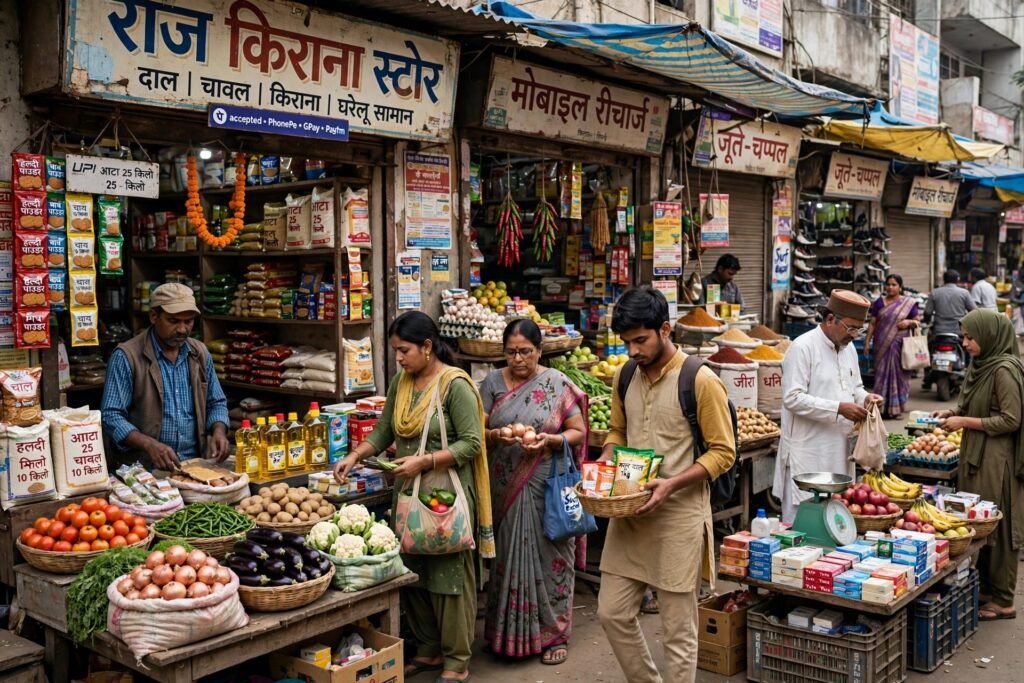
Inflation is globally a very sensitive issue for consumers. As a result, businesses have figured out ingenious ways of charging consumers more without always increasing the prices of their products or services. The consumer economy globally is steadily moving from conventional price inflation to stealth inflation and, increasingly, to an extraction model, in which companies seek to extract more value from the same customer. The issue isn’t that companies monetise customers more aggressively. The problem begins when the additional monetisation exceeds the customer’s perception of additional value.
This shift has clear ramifications for India’s consumption story, which has witnessed rising consumer aspiration, increasing market penetration, rising disposable incomes, premiumisation, digital adoption and first-time consumers entering organised markets. If extraction becomes too aggressive, it threatens the willingness of consumers to trade up.
Shrinkflation (reducing the pack size) and Skimpflation (reducing quality or functionality) are now widely recognised forms of stealth inflation. But as these practices become easier for consumers to detect collectively, companies are increasingly turning to less visible extraction strategies that are harder to discern.
Complimentary Earlier, Now Paid: This year, watching the FIFA World Cup in India required consumers to turn to a paid platform for the entire coverage, while the public broadcaster aired only select matches. More broadly, a host of content and services that were once available at no direct cost to consumers are increasingly being placed behind subscriptions or other forms of payment. This has been one of the more significant shifts in India’s consumer economy in recent years.
Many restaurants, especially in cities, have stopped serving complimentary drinking water. Major retail chains and supermarkets that once provided branded paper or plastic bags free of charge now charge anywhere from Rs 3 to 20 per bag, partly due to environmental regulations and partly as a cost-cutting measure. Telecom operators in India once allowed users to receive incoming calls without a recharge. Today, customers generally need an active monthly plan simply to keep a SIM card operational and continue receiving calls or messages.
Unbundling of Value: What was once included as part of a consolidated service is increasingly being unbundled into separately paid components. In banking, transaction alerts through SMS and cash withdrawal from ATMs beyond specified limits have become chargeable. In aviation, low-cost carriers have unbundled services such as meals and seat selection, charging separately for services that were once incorporated into the overall travel experience.
Free When New, Paid When Popular: UPI becoming a chargeable service for large merchants in case of payments above Rs 2000 is the latest instance. Movie ticketing platforms have evolved from being free initially to levying a small flat fee, and subsequently, to charging fees linked to the ticket price. Convenience fees are also increasingly being charged by payment gateways for online transactions that were largely free until a few years ago.
Vanishing Low-Price Points: Companies regularly discontinue mass-market products or services at the lowest price or entry-level points, either because of rising input costs or as part of a strategic shift towards premiumisation. Telecom operators, for instance, have discontinued some of their lowest-priced prepaid plans, compelling consumers to move to more expensive options. Automobile companies periodically phase out their lowest-priced models in response to rising costs and regulatory compliances.
Public Service, Privately Dispensed: Within the public service ecosystem, some basic services have increasingly been devolved to private players, potentially raising the cost of access for consumers. Municipal corporations, for instance, have introduced user-fees for waste collection and processing, growing the role of private sector waste management companies. Rapid urbanisation has also meant that municipal water supplies are often inadequate for housing societies and commercial establishments, compelling them to turn to privately operated and more expensive water tanker-suppliers to meet their requirements.
Ecosystem Lock-in: Companies create an ecosystem in which switching is either difficult or increasingly expensive. A dishwasher manufacturer may recommend a specific brand of detergent for optimal machine performance. Similarly, a front load washing machine may function most effectively with detergents specifically designed for front-load machines. A car under warranty may also need to be serviced at an authorised service centre to retain warranty coverage.
Dark Patterns: These are perhaps the most covert form of extraction and have consequently attracted increasing regulatory scrutiny. Companies may nudge customers towards expensive options, add unnecessary insurance, make recurring charges difficult to notice, seek excessive personal data, deploy algorithmic price discrimination or make order cancellation deliberately difficult.
The moot question is: how much more can a company extract from a customer before that customer stops being an asset and starts becoming a liability?
This brings us to Extraction Ceiling
Subscribe to read further!